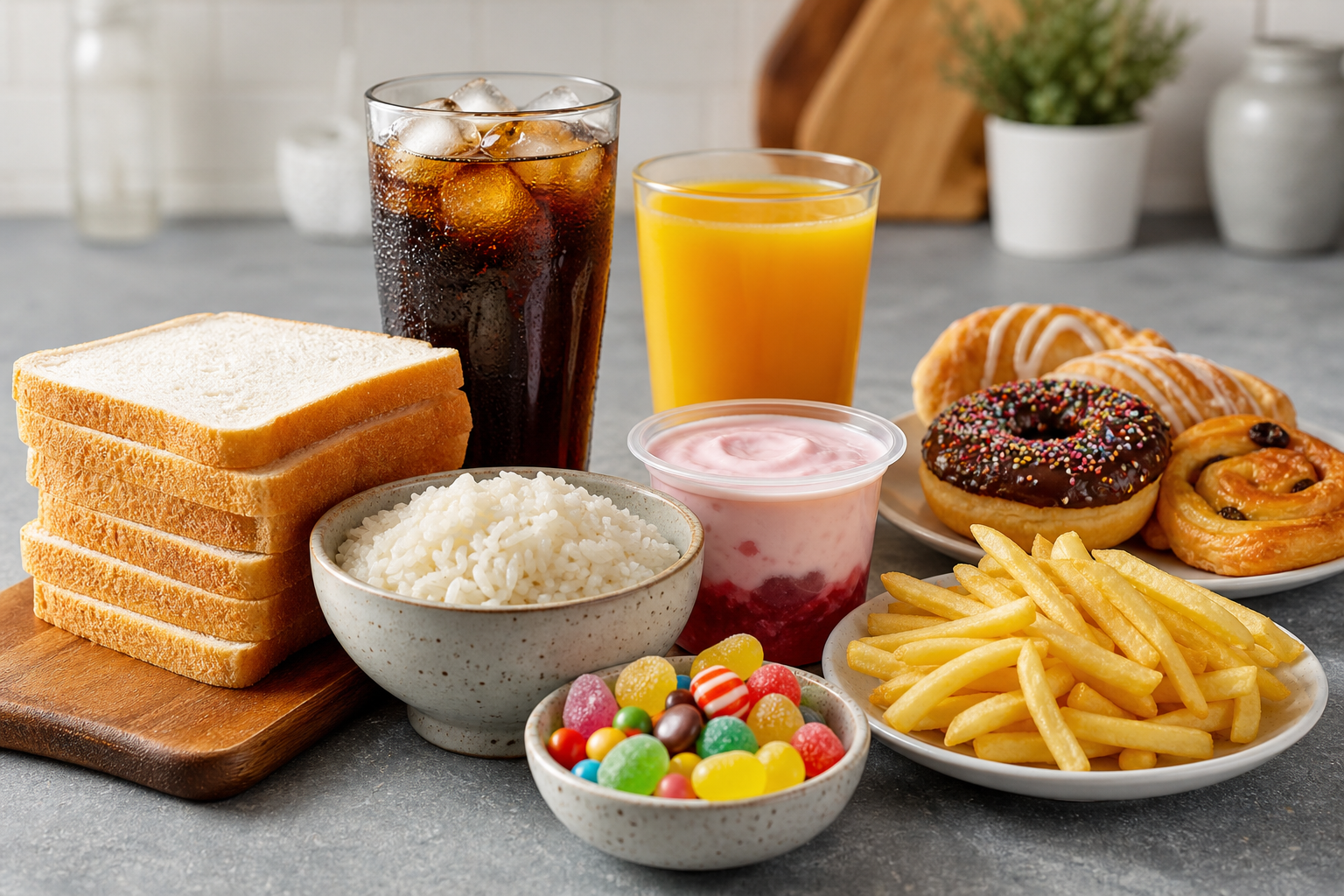
Not all foods affect blood sugar the same way. Some look harmless, some are marketed as “healthy,” and some are simply everyday staples — but they can all cause a sharp rise in glucose if you eat them in the wrong portion or too often.
If you are trying to manage prediabetes, Type 2 diabetes, or insulin resistance, it helps to know which foods tend to spike blood sugar the fastest. The goal is not to fear food. The goal is to make smarter choices, pair foods better, and avoid the hidden sources of sugar and refined carbs that can work against your progress.
🌟 1. White Bread
White bread is made from refined flour, which digests quickly and can raise blood sugar fast. It lacks the fiber that helps slow glucose absorption, so a few slices can leave you hungry again soon after eating.
If you enjoy sandwiches or toast, try swapping white bread for a higher-fiber option such as whole grain, seeded bread, or a lower-carb alternative.
🥖 2. Sugary Breakfast Cereal
Many breakfast cereals contain more sugar than people realize. Even the ones that appear “healthy” can be highly processed and low in protein, which makes them easy to digest and quick to spike blood sugar.
If cereal is a regular part of your routine, choose a high-fiber, low-sugar version and pair it with protein such as Greek yogurt or eggs.
🍔 3. White Rice
White rice is a staple in many households, but it can raise blood sugar quickly because the outer fiber-rich layers have been removed. Larger portions make the effect even stronger.
A smaller serving, combined with vegetables and protein, is usually a better option than eating rice on its own.
🍕 4. Potato Chips
Chips are made from potatoes, refined oils, and salt, which makes them easy to overeat and not very filling. They digest quickly and can raise glucose more than many people expect.
Because chips are often eaten without protein or fiber, they are especially likely to cause a spike followed by another craving soon after.
🍧 5. Soda
Regular soda is one of the fastest ways to raise blood sugar because it contains liquid sugar with no fiber, protein, or fat to slow absorption. Your body can absorb it very rapidly.
“Liquid sugar tends to hit harder because the body does not have to break it down the way it does with solid food.”
🍰 6. Cakes and Pastries
Cakes, cupcakes, donuts, and pastries usually combine refined flour, sugar, and unhealthy fats. That mix makes them easy to digest and very likely to push blood sugar up quickly.
They are best kept as occasional treats rather than everyday snacks.
🍞 7. French Fries
French fries combine starchy potatoes with high heat cooking oil, making them a fast-digesting and highly palatable food. They can raise blood sugar and also make it easier to overeat because they are so tempting.
Baked potato wedges or air-fried versions may be a better choice, especially when paired with a protein-rich meal.
🍓 8. Candy
Candy is mostly concentrated sugar. Because it contains almost no fiber or protein, it can cause a rapid spike in glucose followed by a crash later on.
Even a small handful can be enough to affect blood sugar if you are sensitive to carbohydrates.
🌭 9. Fruit Juice
Fruit juice may sound healthy, but most of the fiber has been removed. That means the natural sugar in the fruit is absorbed much more quickly than if you ate the whole fruit.
Whole fruits are generally a better option because they provide fiber, chew time, and better satiety.
🍎 10. Sweetened Yogurt
Flavored yogurts can look like a healthy choice, but many are packed with added sugar. Without reading the label, it is easy to end up with a snack that behaves more like dessert.
Plain Greek yogurt with berries, nuts, or cinnamon is usually a better blood-sugar-friendly choice.
🍛 11. Pasta Made from Refined Flour
Traditional white pasta can raise blood sugar, especially when it is served in large portions. The effect becomes stronger when it is paired with sugary sauces and little protein.
A smaller serving with vegetables, lean protein, and a tomato-based sauce is usually a better strategy.
🍜 12. Sweetened Coffee Drinks
A coffee drink can become a blood sugar problem when syrup, flavored creamers, whipped toppings, and added sugar turn it into a dessert in a cup.
Black coffee, unsweetened coffee, or coffee with a small amount of milk is a much safer choice for most people watching glucose.
🍎 13. Dried Fruit
Dried fruit can be easy to overeat because the water has been removed, which makes the sugar more concentrated. Even though it comes from fruit, it can raise blood sugar much faster than the fresh version.
If you eat dried fruit, keep the portion small and pair it with nuts or seeds.
🧀 14. Crackers and Pretzels
These snack foods are usually made from refined flour and are easy to eat in large amounts. They do not offer much fiber or protein, which makes them a weak choice for blood sugar control.
If you want a crunchy snack, try nuts, seeds, cucumber slices, or roasted chickpeas instead.
🍉 15. Flavored Instant Oatmeal
Plain oats can be a good breakfast, but flavored instant packets often contain added sugar and digest more quickly than less processed oats. That can make them less ideal for blood sugar stability.
Choose plain oats and add your own toppings such as nuts, chia seeds, cinnamon, and a few berries for a better balance.
Better ways to reduce blood sugar spikes:
- Combine carbs with protein and healthy fat
- Watch portion size, even with “healthy” foods
- Choose high-fiber versions of bread, rice, and pasta
- Avoid sugary drinks and liquid calories
- Read labels for hidden sugars
Not every person will respond to these foods in exactly the same way, but the pattern is clear: refined carbs, added sugar, and low-fiber foods are the biggest culprits when it comes to blood sugar spikes. The more often you eat them, the harder it can become to keep your glucose steady.
The good news is that small changes can make a big difference. Start by replacing one or two of these foods each day with more balanced options, and pay attention to how your body responds.
If you want help building meals that support better blood sugar control, our team at Diabetic Health Guide can guide you with personalised nutrition support, meal planning, and practical lifestyle strategies.