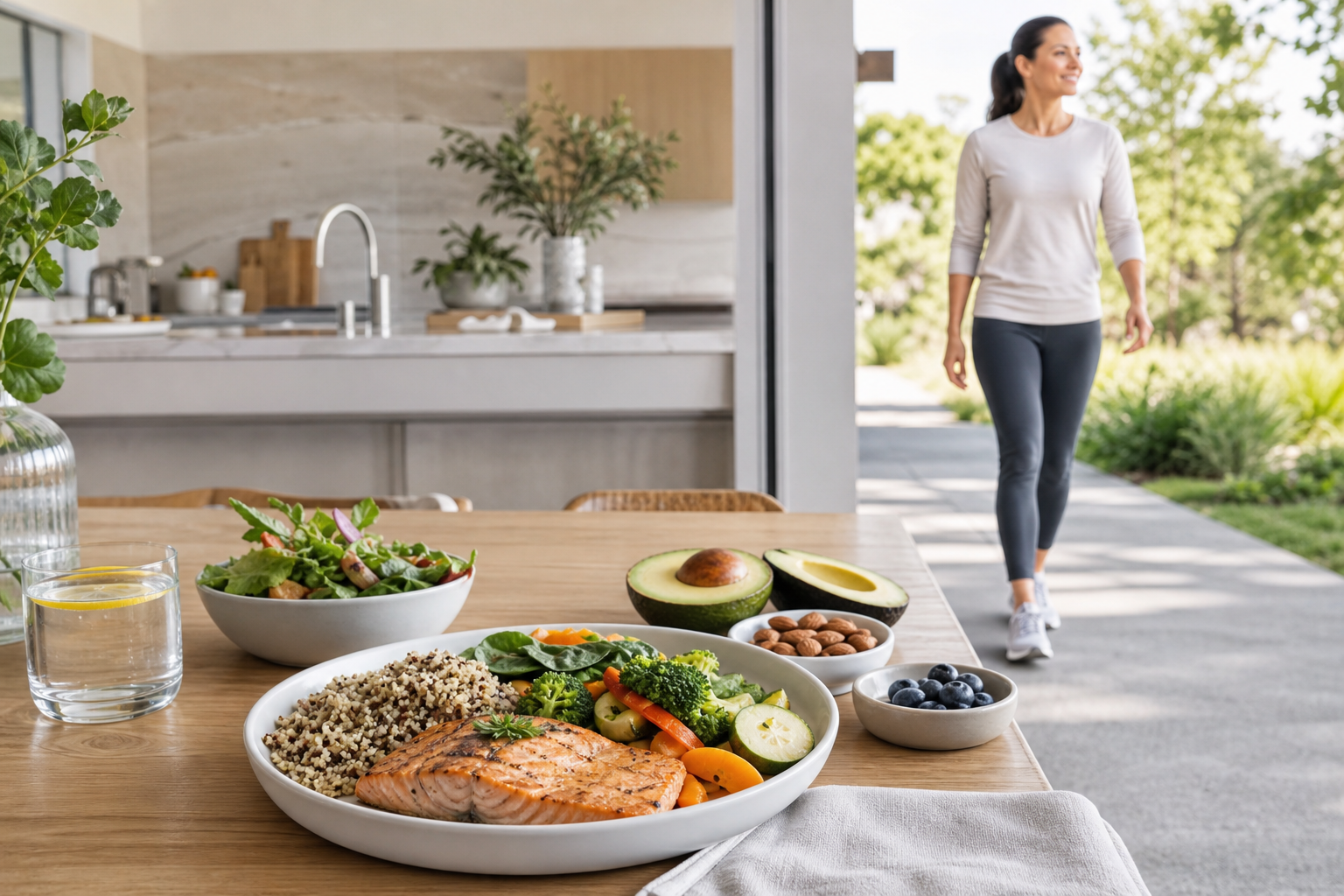
If you want to prevent blood sugar spikes after meals, the good news is that a few simple habits can make a big difference. You do not have to eat perfectly — you just need meals that help glucose rise more slowly and steadily.
Post-meal blood sugar spikes are often influenced by what you eat, how much you eat, and how your body responds to carbohydrates. The right mix of fiber, protein, healthy fat, and movement can help reduce those sharp rises.
🌟 1. Build Meals Around Fiber
Fiber slows digestion, which can help prevent blood sugar from rising too quickly after eating. Foods like non-starchy vegetables, beans, lentils, berries, chia seeds, and whole grains are especially helpful.
A meal that starts with fiber is often easier for the body to manage than one built mostly around refined carbs. Try to make vegetables the largest part of your plate whenever possible.
🔪 2. Pair Carbs With Protein and Healthy Fat
Carbohydrates are not the enemy, but they are less likely to cause a spike when they are eaten with protein and fat. For example, pairing fruit with nuts, toast with eggs, or rice with chicken and vegetables can slow glucose absorption.
This balance helps meals feel more satisfying too, which may reduce the chance of snacking soon after eating.
📈 3. Watch Portion Sizes of Refined Carbs
Large servings of white bread, white rice, pasta, pastries, and sugary drinks can raise blood sugar quickly, especially if they are eaten without enough protein or fiber. Smaller portions can make a noticeable difference.
You do not need to eliminate these foods completely. Instead, try reducing the serving size and adding more vegetables, beans, or lean protein to the meal.
🏃 4. Take a Short Walk After Eating
Even 10 to 15 minutes of light walking after a meal can help muscles use glucose more efficiently. This simple habit may reduce the size of the blood sugar rise that happens after eating.
If walking is not comfortable, gentle movement like tidying the kitchen, stretching, or standing up for a few minutes can still help.
“The best way to prevent blood sugar spikes after meals is to combine smart food choices with small habits that help your body handle glucose more smoothly.”
🍲 5. Eat in a Slower, More Mindful Way
Eating quickly can make it easier to overeat and harder for your body to keep blood sugar steady. Slowing down gives your brain time to register fullness and can help you make better food choices at the table.
Try putting your fork down between bites, avoiding distractions when possible, and stopping when you feel comfortably satisfied rather than overly full.
💪 6. Make Breakfast and Dinner More Balanced
Blood sugar spikes are not only about lunch. Breakfast foods like sweet cereal, pastries, and juice can cause a fast rise early in the day, while large carb-heavy dinners may leave glucose elevated overnight.
A better pattern is to include protein, fiber, and healthy fat at every meal. Eggs with vegetables, Greek yogurt with berries, or salmon with roasted vegetables are simple examples.
📜 7. Track What Affects Your Numbers
If you use a glucose meter or continuous glucose monitor, pay attention to which meals cause the biggest spikes. The pattern may be different from person to person.
Tracking food, activity, and timing can help you learn which changes work best for your body. That information makes it easier to build a routine that supports steadier blood sugar.
💡 8. Be Consistent, Not Perfect
One meal will not define your health, but repeated habits can shape your blood sugar response over time. The goal is not to avoid every spike forever — it is to reduce how often they happen and how severe they become.
When your routine is built around balanced meals, light movement, and smaller portions of refined carbs, your blood sugar is more likely to stay in a healthier range after eating.
If you want to prevent blood sugar spikes after meals, start with just one change today. Add more fiber, walk after dinner, or swap one refined carb for a more balanced option. Small steps can add up quickly.
Looking for more ways to support steady blood sugar? Keep exploring practical nutrition and lifestyle tips that make healthy habits easier to follow every day.