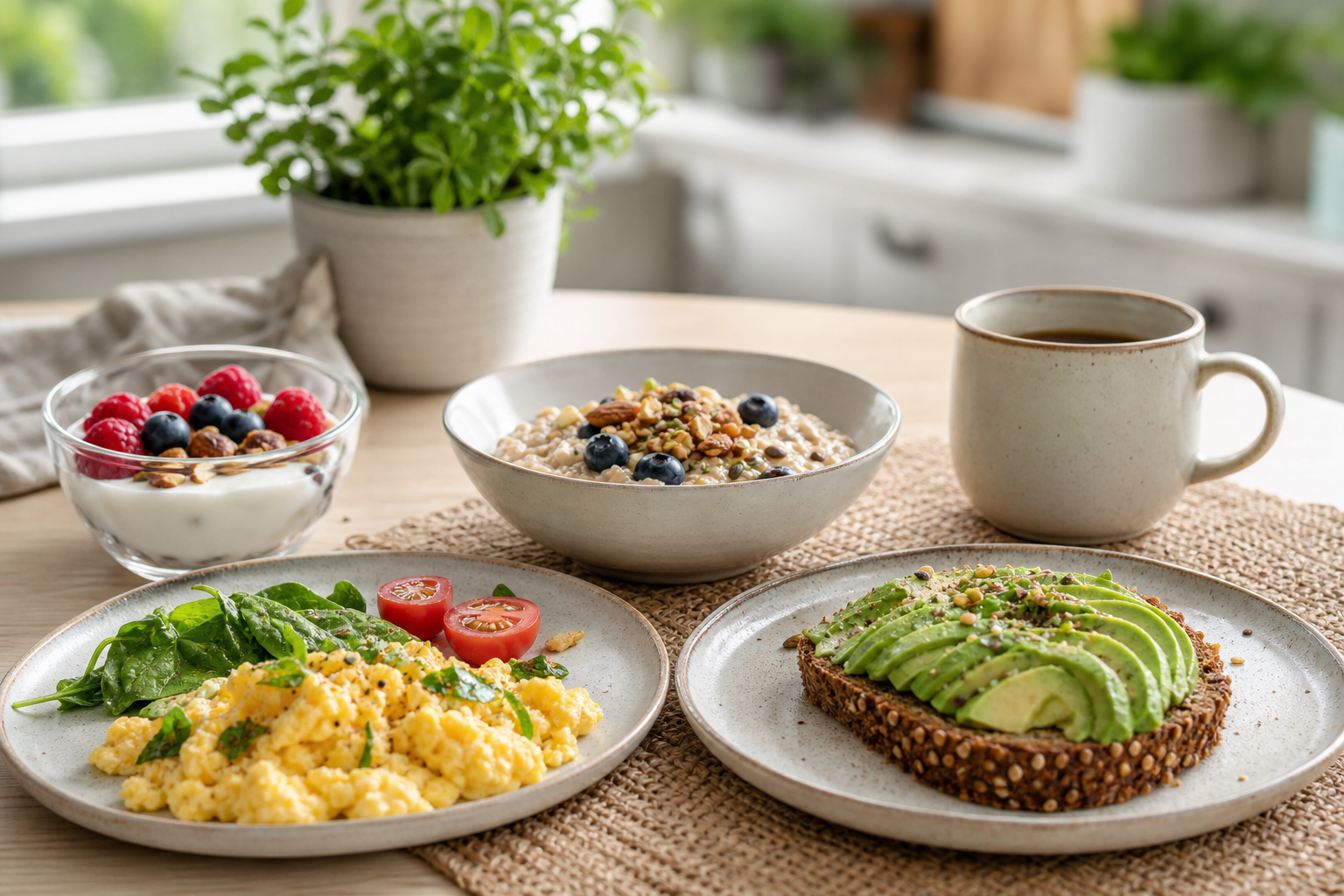
Best Breakfast Foods for Diabetes
🕐 6 min read
👤 Diabetic Health Guide Team
Breakfast can make a big difference in how your blood sugar behaves for the rest of the day. The goal is not to avoid food — the goal is to choose balanced breakfasts that are rich in protein, fiber, and healthy fats so you feel full, energized, and in control.
The best breakfast foods for diabetes are the ones that digest slowly and help prevent sharp blood sugar spikes. That means fewer sugary cereals, white breads, and pastries — and more eggs, Greek yogurt, seeds, vegetables, nuts, and smart carbs that support steady energy.
🌟 1. Eggs with Vegetables
Eggs are one of the best breakfast foods for diabetes because they are high in protein and contain almost no carbohydrates. When you pair them with non-starchy vegetables like spinach, mushrooms, tomatoes, onions, or bell peppers, you get a meal that is filling and blood-sugar friendly.
You can enjoy them as scrambled eggs, an omelette, or boiled eggs with sautéed vegetables on the side. This kind of breakfast supports satiety and helps reduce the mid-morning cravings that often come after high-sugar meals.
“A diabetes-friendly breakfast should help you feel satisfied, not sleepy, shaky, or hungry an hour later.”
🥖 2. Plain Greek Yogurt with Chia Seeds and Berries
Unsweetened Greek yogurt is an excellent breakfast base because it is high in protein and naturally lower in sugar than flavored yogurts. Add chia seeds for extra fiber and a small handful of berries for natural sweetness without a major glucose spike.
Strawberries, raspberries, and blueberries are especially popular because they offer antioxidants and a lower glycemic impact than many other fruits. Together, these ingredients create a breakfast that is simple, refreshing, and balanced.
Best add-ins for yogurt:
- 1 tablespoon chia seeds
- 1 tablespoon ground flaxseed
- A few walnuts or almonds
- Fresh berries
- Cinnamon for flavor
🌾 3. Oatmeal with Nuts and Seeds
Oatmeal can be a smart option for diabetes when you choose plain oats and keep the toppings balanced. Oats contain soluble fiber, which helps slow digestion and may support better post-meal blood sugar control.
The key is to avoid instant flavored packets loaded with sugar. Instead, prepare rolled oats or steel-cut oats and top them with nuts, seeds, cinnamon, and a few berries for a more complete meal.
🥜 4. Avocado on Whole Grain or Seeded Toast
Avocado provides heart-healthy fats and fiber, while whole grain or seeded bread offers a slower-digesting carbohydrate than white bread. Together, they make a satisfying breakfast that can work well for people managing diabetes.
For extra protein, you can add a boiled egg, cottage cheese, or a sprinkle of seeds on top. This turns a simple toast into a more balanced meal with better blood sugar support.
A simple formula to remember:
Pair protein + fiber + healthy fat at breakfast to reduce spikes and keep energy steady.
🥗 5. Cottage Cheese with Nuts and Cucumber
Cottage cheese is a great high-protein breakfast choice, especially if you prefer savory foods in the morning. It pairs well with nuts, cucumber slices, tomatoes, or a few olives for a quick meal that is low in sugar and easy to prepare.
Because it is rich in protein, cottage cheese can help keep you full for longer. That makes it especially useful for people who tend to get hungry soon after breakfast.
💡 Final Thoughts
The best breakfast foods for diabetes are not about restriction — they are about smart combinations. When you build a breakfast around protein, fiber, and healthy fats, you give your body a much better chance to stay steady and satisfied through the morning.
Start with simple foods like eggs, yogurt, oats, avocado, and nuts, then pay attention to how your body responds. Small, consistent changes at breakfast can make a meaningful difference in your blood sugar control over time.
“A better breakfast is often the first step toward better blood sugar.”
If you found this guide helpful, explore more diabetes-friendly nutrition tips on our blog and take the next step toward smarter daily eating.