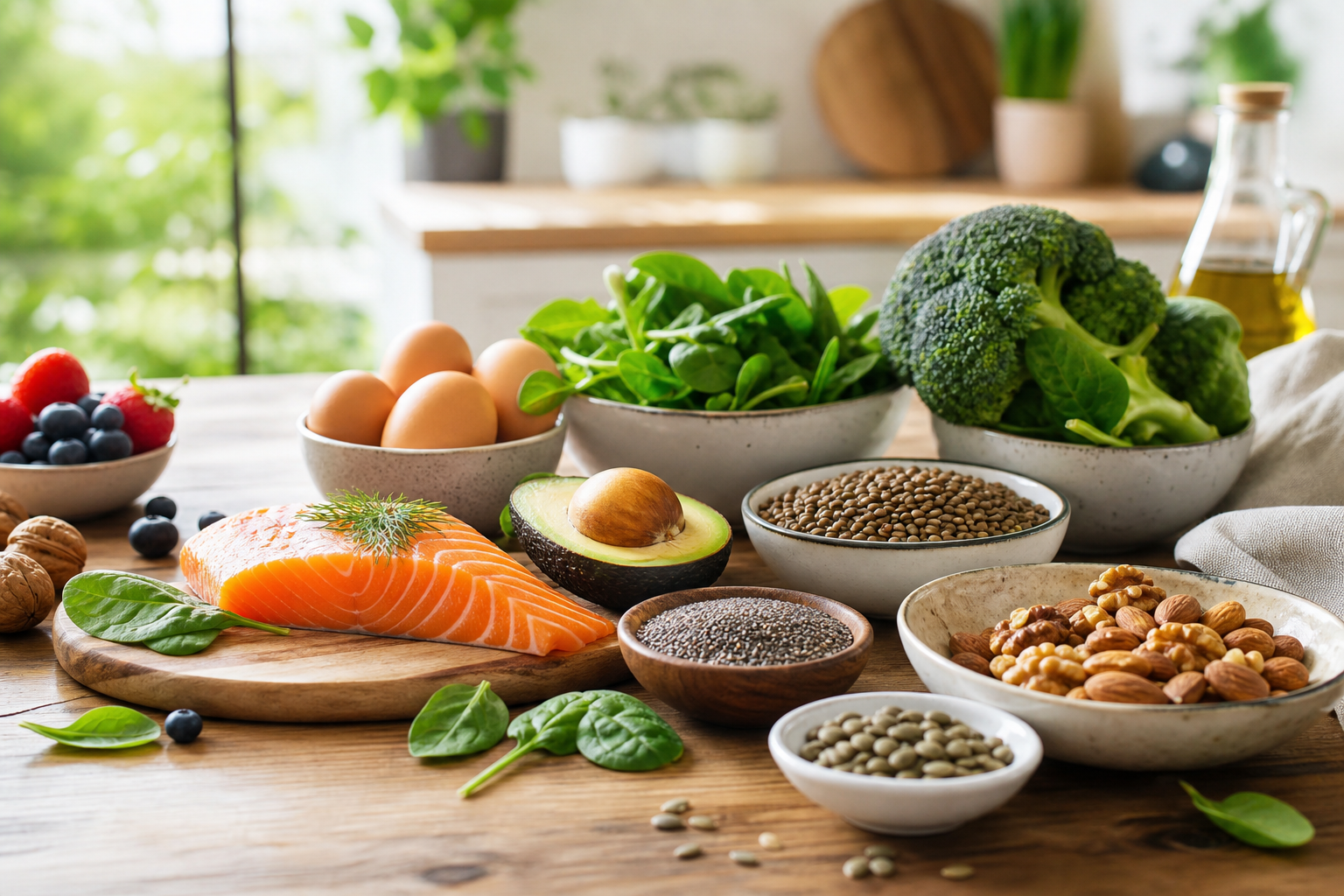
Insulin resistance can make it harder for your body to use blood sugar efficiently, which may leave you feeling tired, hungry, or stuck on a blood sugar roller coaster. The good news is that the foods you choose every day can make a real difference in how steady your energy feels.
The best foods for insulin resistance are usually the ones that combine fiber, protein, healthy fats, and minimal added sugar. These foods tend to digest more slowly, help you feel full longer, and support more stable blood sugar levels throughout the day.
🌟 1. Non-Starchy Vegetables
Leafy greens, broccoli, cauliflower, zucchini, peppers, cucumbers, and green beans are some of the most helpful foods for insulin resistance. They are low in calories and carbohydrates but high in fiber, water, and important nutrients.
Build meals around vegetables whenever possible. A large salad, roasted broccoli, or a stir-fry with plenty of colorful vegetables can help crowd out more refined foods.
🐖 2. Eggs
Eggs are a simple, affordable source of protein that can help keep you satisfied for hours. Because they contain very few carbohydrates, they are unlikely to cause a sharp rise in blood sugar on their own.
They work well for breakfast, lunch, or a quick snack. Try them boiled, scrambled, or paired with vegetables for a more balanced meal.
🐟 3. Fatty Fish
Salmon, sardines, mackerel, and trout are rich in protein and omega-3 fats. These nutrients support heart health, which is especially important because insulin resistance is often linked with a higher risk of cardiovascular problems.
Aim to include fatty fish a couple of times per week if you enjoy it. Pair it with vegetables and a high-fiber side like lentils or quinoa for a balanced plate.
“The best meals for insulin resistance are not about restriction — they are about building plates that keep you fuller, steadier, and more energized.”
🥕 4. Beans and Lentils
Beans, chickpeas, and lentils are excellent choices because they offer a rare combination of plant protein, fiber, and slow-digesting carbohydrates. That makes them especially useful for supporting steadier blood sugar.
They are versatile too. Add them to soups, salads, grain bowls, or tacos for a filling upgrade that helps replace more refined starches.
🥦 5. Avocados
Avocados are packed with healthy monounsaturated fats and fiber, both of which can help slow digestion and support better fullness after meals. They are also very low in sugar.
You can add avocado to eggs, salads, whole-grain toast, or bowls with beans and vegetables. A little goes a long way in terms of flavor and satisfaction.
🥜 6. Nuts and Seeds
Almonds, walnuts, chia seeds, flaxseeds, pumpkin seeds, and sunflower seeds are nutrient-dense foods that offer healthy fats, fiber, and a bit of protein. They make a smart snack and a helpful topping for yogurt, oatmeal, or salads.
Because nuts and seeds are calorie-dense, portion size matters. A small handful or a couple of tablespoons is often enough.
🍌 7. Berries
Strawberries, blueberries, raspberries, and blackberries are some of the best fruit choices for insulin resistance because they are relatively lower in sugar and higher in fiber than many other fruits.
They are perfect when you want something sweet without overdoing it. Pair berries with Greek yogurt, cottage cheese, or nuts for even better balance.
Good meal-building combinations include:
- Eggs with spinach and avocado
- Salmon with roasted broccoli and beans
- Greek yogurt with berries and chia seeds
- Chicken salad with mixed greens and pumpkin seeds
- Lentil soup with a side of vegetables
🥗 8. Plain Greek Yogurt
Plain Greek yogurt is high in protein and lower in sugar than many flavored yogurts. It can be a convenient breakfast or snack when you want something creamy and filling.
For extra flavor, add cinnamon, berries, or chopped nuts instead of sweetened toppings or syrup.
Final Thoughts
When it comes to insulin resistance, food quality matters just as much as food quantity. Meals built around vegetables, protein, fiber, and healthy fats can help support better blood sugar control and reduce the energy dips that often come with more refined eating patterns.
You do not need a perfect diet to start seeing progress. Even small swaps — like choosing beans over white bread, berries over sweets, or eggs instead of a sugary breakfast — can add up over time.
If you want to manage insulin resistance more effectively, start by building your next meal around one of the foods above. Small changes done consistently are where the biggest results often begin.