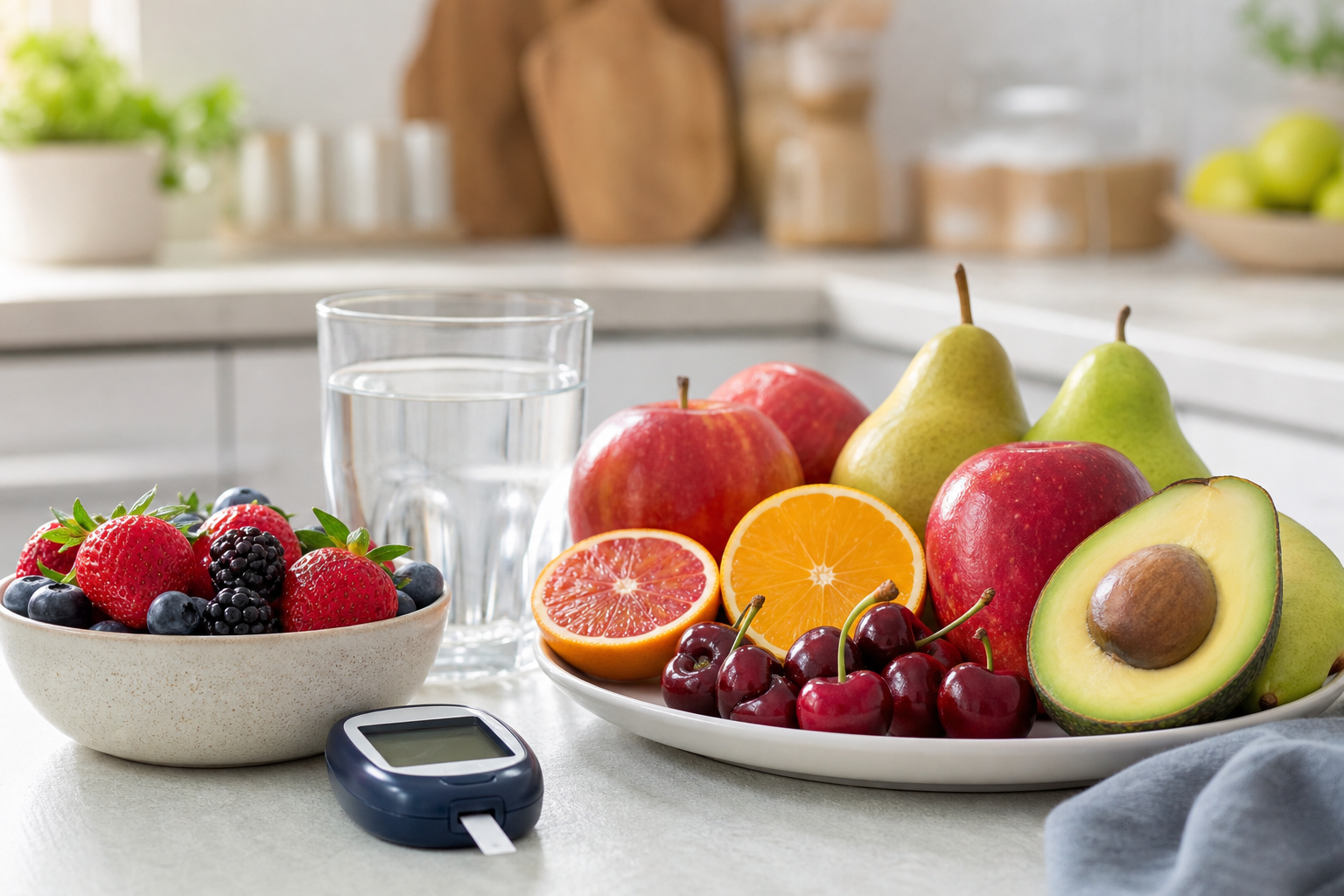
Fruit can absolutely fit into a diabetes-friendly eating plan. The key is choosing fruits that offer fiber, hydration, and vitamins without causing a sharp rise in blood sugar when eaten in sensible portions.
The best fruits for diabetics are usually the ones that are naturally lower in sugar, higher in fiber, and easy to pair with protein or healthy fat. That combination helps slow digestion and can make fruit more satisfying as a snack or part of a meal.
🌟 1. Berries
Berries are one of the top choices for people managing diabetes. Strawberries, blueberries, raspberries, and blackberries are rich in fiber and antioxidants, and they tend to have less sugar than many other fruits.
A small bowl of berries can satisfy a sweet craving without pushing blood sugar up as quickly as candy, baked goods, or fruit juice. They also work well with plain Greek yogurt, cottage cheese, or a handful of nuts.
💪 2. Apples and Pears
Apples and pears are filling, easy to find, and naturally high in fiber, especially when you eat the skin. Their texture and crunch can make them a satisfying snack that takes longer to eat, which may help with portion control.
These fruits are a good option when you want something portable and simple. Try pairing slices with peanut butter or almond butter to add protein and healthy fat, which can help reduce a quick blood sugar spike.
🥗 3. Citrus Fruits and Stone Fruits
Oranges, grapefruit, peaches, plums, and cherries can also be smart choices in moderation. Citrus fruits provide vitamin C and water, while stone fruits often offer a naturally sweet flavor with a reasonable amount of fiber.
Whole fruit is usually a better choice than juice because it keeps the fiber intact. If you choose grapefruit, keep in mind that it can interact with certain medications, so it is wise to check with your healthcare professional if you are unsure.
“For most people with diabetes, fruit does not need to be avoided — it just needs to be chosen thoughtfully and eaten in the right portion.”
Some fruits are easier on blood sugar than others, but portion size still matters. A small serving of fruit paired with protein is often a better choice than a large bowl eaten on its own.
You may also want to limit dried fruit and fruit juice, since both are much easier to overconsume and can raise glucose more quickly. Whole fruit usually gives you more volume, more fiber, and better fullness.
🌿 4. Avocados and Tomatoes
Although many people think of these as vegetables, avocados and tomatoes are technically fruits and can be excellent additions to a diabetes-friendly diet. Avocados are especially helpful because they are very low in sugar and high in heart-healthy fats and fiber.
Tomatoes are also a smart option for snacks, salads, and cooked meals. They are low in carbohydrate and add flavor, color, and nutrients without significantly affecting blood sugar.
Choosing the best fruits for diabetics is less about strict rules and more about balance. When fruit is eaten whole, in moderate portions, and alongside other nourishing foods, it can be part of a healthy pattern that supports steady energy.
Start by focusing on berries, apples, pears, citrus, and other high-fiber options, then watch how your body responds. If you are building a meal plan for diabetes, fruit can be a helpful and enjoyable part of it.
Looking for more practical nutrition tips? Explore our latest diabetes-friendly guides on the blog.