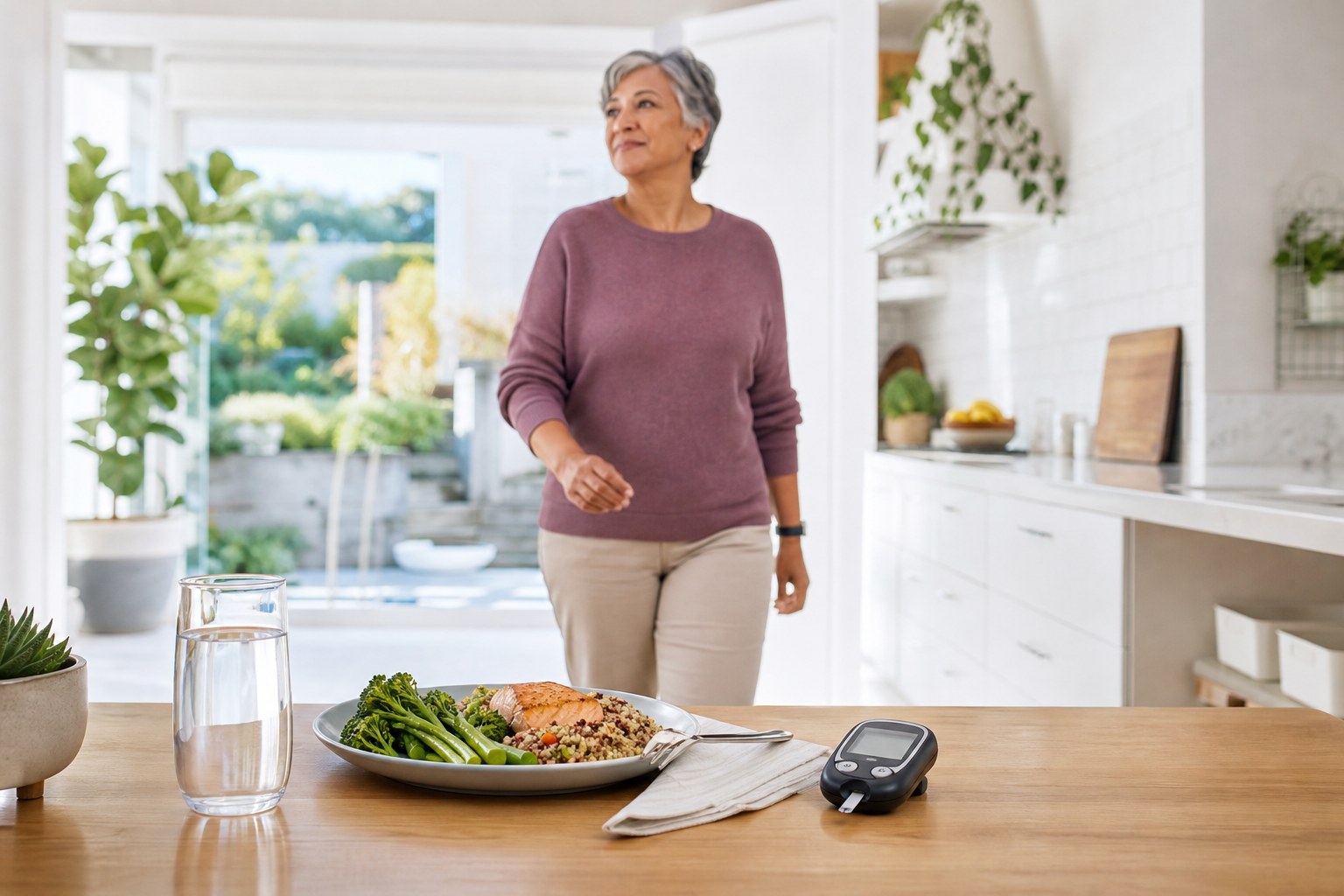
If your blood sugar rises after a meal, the first goal is to stay calm and take a few practical steps that may help bring it down. In many cases, light movement, hydration, and avoiding extra carbs can make a noticeable difference.
Post-meal spikes are common, especially after larger servings or meals higher in refined carbohydrates. The good news is that there are safe, simple ways to respond quickly while also reducing the chances of another spike later in the day.
🌟 1. Take a Short Walk
One of the fastest ways to help lower blood sugar after eating is to move your body. A 10- to 20-minute walk can help your muscles use glucose more efficiently, which may reduce how high your numbers stay after a meal.
You do not need a fast or intense workout. Even a gentle walk around the block, around your home, or in place can be helpful. If walking is not possible, try light activity such as tidying up, gentle stretching, or easy cycling on a stationary bike.
💪 2. Drink Water
Staying hydrated will not replace medication or fix a high reading on its own, but water can support your body after a meal and may help you feel better overall. If you are slightly dehydrated, blood sugar can sometimes look higher and feel harder to manage.
Choose plain water or unsweetened drinks instead of juice, soda, or sweetened coffee drinks, which can raise glucose even more. If you are unsure how much fluid is right for you, especially if you have kidney, heart, or fluid restrictions, follow your clinician’s guidance.
🥗 3. Avoid More Carbs Right Away
If your meal already pushed your blood sugar up, adding dessert, sweet snacks, or another starch-heavy food soon after can keep the number elevated longer. Try to pause before reaching for extra carbs right away.
If you are still hungry, choose a small protein-focused snack such as a few nuts, plain Greek yogurt, cheese, or vegetables with hummus. Keeping the next bite balanced can help prevent a second wave of glucose.
💬 4. Check Your Blood Sugar Again at the Right Time
If you monitor glucose at home, it can help to recheck after a meal based on the timing your healthcare team recommends. Many people look at their reading about 1 to 2 hours after eating to see how the meal affected them.
Writing down what you ate, how much you moved, and what the number was can help you spot patterns. Over time, that information may show which meals tend to spike you and which choices keep things steadier.
🕐 5. Adjust the Next Meal to Prevent Another Spike
Once the immediate rise starts settling, look ahead to your next meal. Meals built around non-starchy vegetables, lean protein, healthy fat, and high-fiber carbs are less likely to send blood sugar climbing again.
A good plate might include grilled chicken or beans, salad or roasted vegetables, and a moderate portion of brown rice, quinoa, or another whole grain. Small changes like portion control and eating slower can also make a meaningful difference.
If your post-meal blood sugar is frequently very high, or if you take insulin or medications that can cause low blood sugar, do not rely on home strategies alone. Reach out to your healthcare team for personalized advice.
The fastest helpful steps after eating are usually simple: move a little, drink water, avoid extra carbs, and learn from the reading. Over time, those habits can make it easier to keep post-meal spikes under control.
If your after-meal numbers are regularly high, the issue may be meal size, carb quality, medication timing, or a combination of factors. A diabetes care professional can help you find the cause and adjust your plan safely.
Looking for more practical blood sugar tips? Browse our latest guides for simple, realistic ways to support steadier glucose throughout the day.