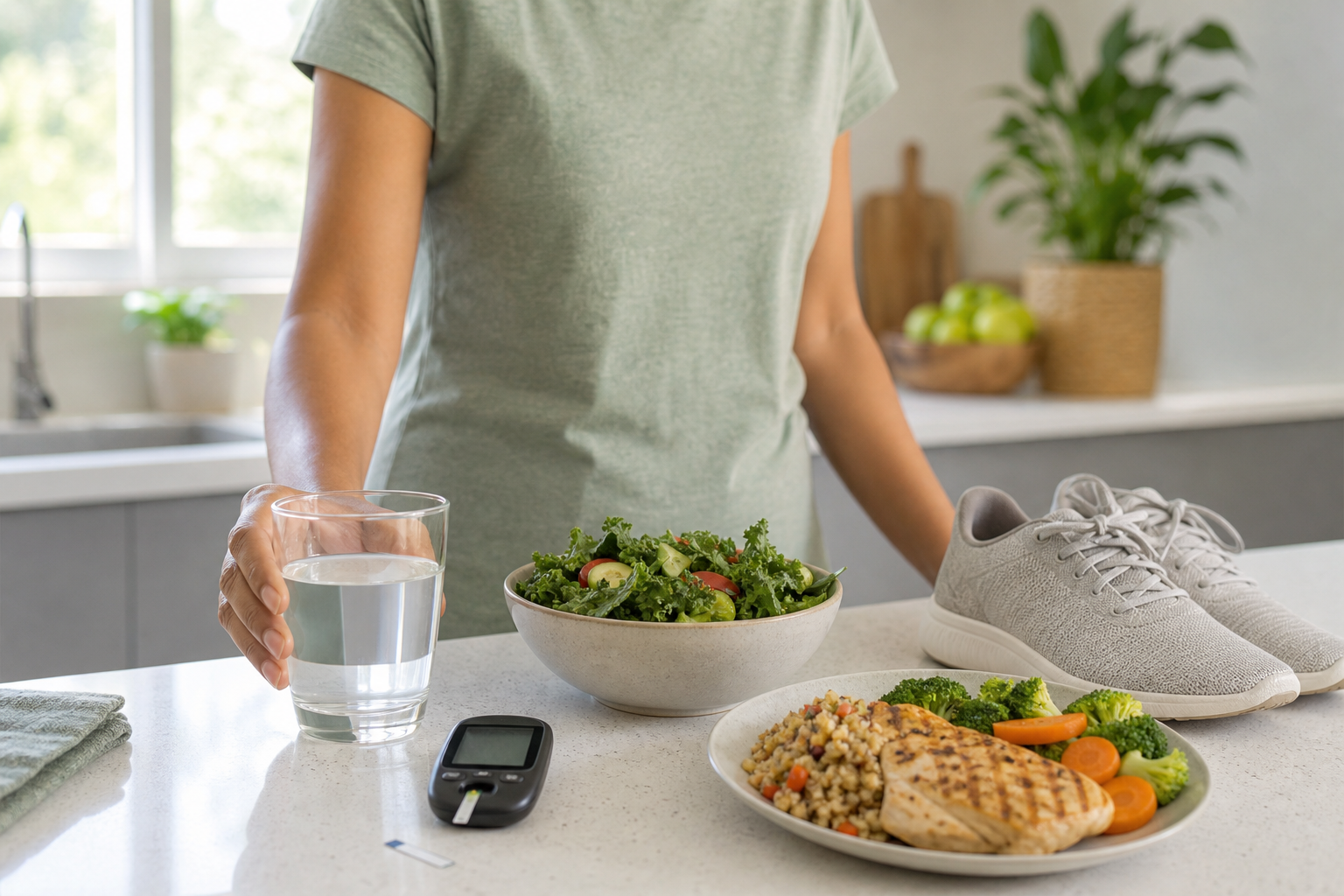
If your blood sugar is running high, the first priority is to stay calm and take simple steps that can help bring it down safely. In many cases, hydration, light movement, and a smarter food choice can make a real difference within a short time.
Blood sugar can rise after a large meal, stress, illness, missed medication, or eating more refined carbohydrates than usual. The goal is not to panic. The goal is to respond quickly with actions that support your body rather than make the spike worse.
🌟 1. Drink Water Right Away
Dehydration can make high blood sugar worse because there is less fluid in your bloodstream to help your kidneys flush out excess glucose. Drinking water is one of the easiest and safest first steps you can take.
Choose plain water rather than juice, soda, or sweetened drinks. If you have been sweating a lot or feel unwell, sipping water regularly over the next hour can help your body recover.
🚶 2. Take a Short Walk
A gentle walk after eating can help muscles use glucose for energy, which may lower blood sugar more quickly. Even 10 to 20 minutes of light movement can be helpful if you feel well enough.
Keep the pace easy. This is not the time for intense exercise if your blood sugar is very high, you feel dizzy, or you have ketones. A calm walk around the house, yard, or block is often enough.
“When blood sugar rises, small actions done early are often more effective than waiting and hoping it comes down on its own.”
🥗 3. Avoid More Sugar and Refined Carbs
If your blood sugar is already high, adding more sugar, bread, pastries, white rice, or sweet snacks will usually make the problem worse. It is better to pause on carbohydrates until your levels begin to settle.
If you are hungry, choose a balanced, lower-carb snack that includes protein or fiber, such as nuts, seeds, eggs, or plain Greek yogurt. These choices are less likely to cause another spike.
🍳 4. Eat a Protein-Rich, Fiber-Rich Meal
If you need a meal after checking your glucose, build it around protein, non-starchy vegetables, and healthy fats. This combination helps slow digestion and can reduce the chance of another rapid rise.
Good options include grilled chicken with salad, eggs with vegetables, tuna with greens, or tofu with stir-fried vegetables. The more processed the meal, the faster it usually affects blood sugar.
Quick blood sugar-friendly meal ideas:
- Eggs with spinach and tomatoes
- Grilled chicken with cucumber salad
- Plain Greek yogurt with chia seeds
- Salmon with steamed vegetables
- Handful of nuts with a boiled egg
🧠 5. Check for Stress, Illness, or Missed Medication
High blood sugar is not always caused by food. Stress, infection, poor sleep, and missing diabetes medication can push glucose up quickly. If you are sick, your body may release more stress hormones, which can increase blood sugar even if you are not eating much.
If you have a glucose meter, check your levels again after making the changes above. Tracking the number can help you decide whether things are improving or whether you need medical support.
⚠️ 6. Know When to Get Help
You should seek urgent medical help if your blood sugar is very high and you have symptoms such as vomiting, confusion, trouble breathing, severe weakness, or signs of dehydration. These can be signs of a medical emergency.
If your levels stay high for several readings, or you are unsure what to do, contact a healthcare professional promptly. Quick home steps are useful, but they are not a substitute for proper treatment when the situation is serious.
“The fastest safe way to lower blood sugar is to respond early, keep it simple, and avoid making the spike worse.”
The best long-term strategy is to reduce the number of spikes in the first place. That means building meals around protein and fiber, staying active, managing stress, and following your treatment plan consistently.
If you want support creating a plan that fits your lifestyle, our team can help you understand your triggers and build habits that keep blood sugar steadier day by day.
Need help managing blood sugar more effectively? Start with one small step today: drink water, take a short walk, and choose your next meal wisely. For a personalised approach, explore our diabetes coaching and nutrition support to get expert guidance tailored to your needs.