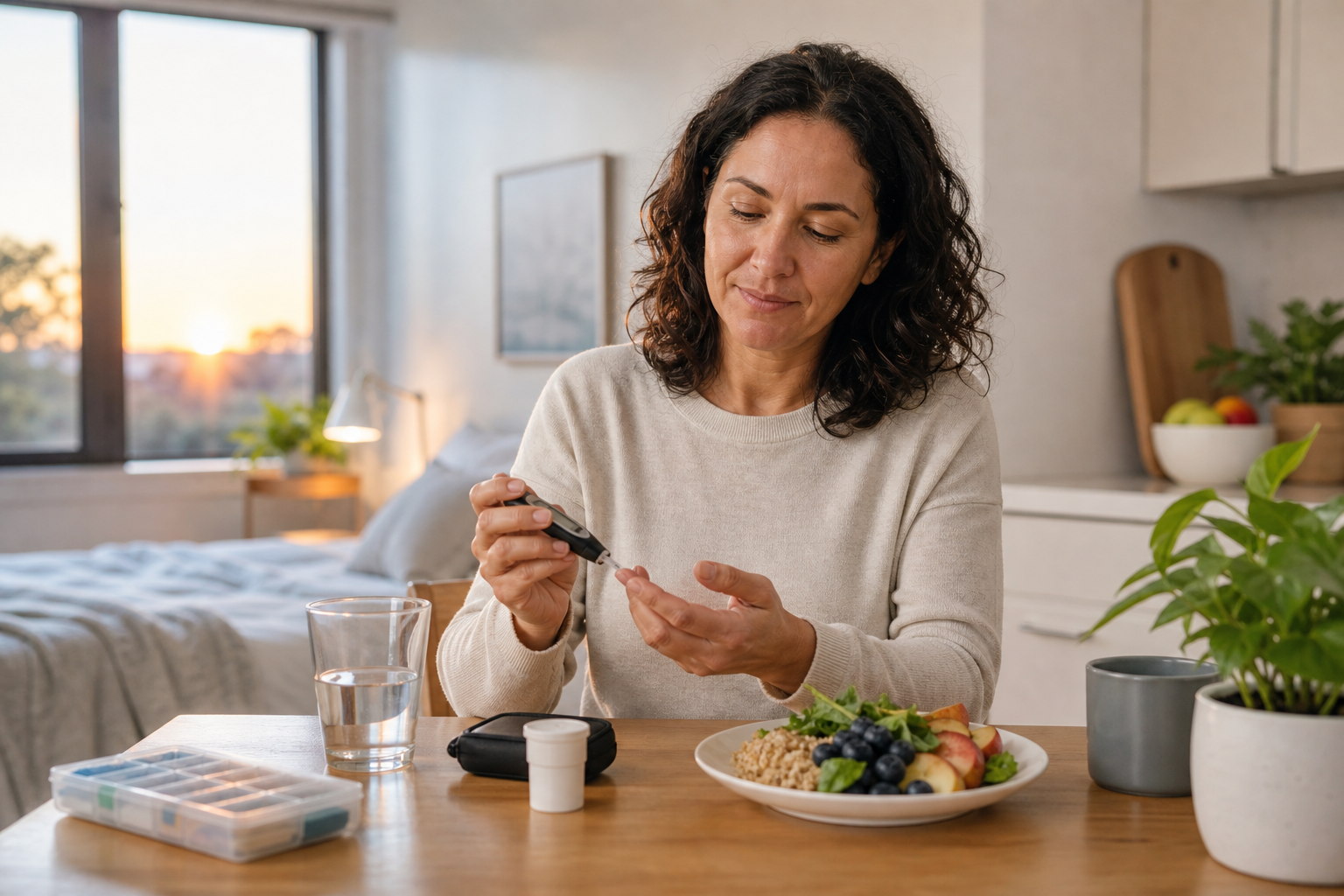
Waking up to high blood sugar can be frustrating, especially when your numbers are better later in the day. In many cases, the dawn phenomenon is responsible — a natural early-morning rise in hormones that signals the liver to release extra glucose.
The good news is that there are several practical ways to lower morning highs. By adjusting your evening routine, improving sleep, moving a little more after dinner, and reviewing your diabetes plan with your healthcare team, you may be able to bring those fasting numbers down over time.
🌟 1. Confirm It Is the Dawn Phenomenon
Before making changes, it helps to understand what is causing the morning rise. If your blood sugar is normal at bedtime, stays elevated overnight, and is still high when you wake up, that pattern often points to the dawn phenomenon.
If your clinician has recommended it, checking glucose before bed and occasionally around 2 to 3 a.m. can help show whether the rise starts overnight or happens after waking. A short log of meals, activity, stress, sleep, and medication timing can make the pattern easier to spot.
💪 2. Adjust Your Evening Meal
A large dinner, late-night snacking, or a meal heavy in refined carbohydrates can leave blood sugar elevated well into the night. Try focusing dinner on non-starchy vegetables, lean protein, and a moderate serving of high-fiber carbohydrates such as beans, lentils, or whole grains.
Eating a little earlier may also help some people. The goal is not to skip dinner, but to avoid going to bed with a meal that is still driving glucose upward several hours later.
🥗 3. Move More After Dinner
A short walk after dinner can help your muscles use more glucose, which may reduce how much is left circulating overnight. You do not need a hard workout — even 10 to 20 minutes of easy movement can be helpful for some people.
If walking is not practical, try gentle activity at home such as light stretching, tidying up, or cycling on a stationary bike. The main idea is to avoid going straight from dinner to bed without any movement in between.
🕐 4. Improve Sleep and Reduce Stress
Poor sleep and higher stress levels can make blood sugar harder to control. When sleep is disrupted, the body may release more stress hormones that can push glucose higher overnight and early in the morning.
Try keeping a consistent sleep schedule, limiting late caffeine, and making your bedroom as dark and quiet as possible. Relaxation habits such as deep breathing, prayer, reading, or a short wind-down routine can also help your body settle before bed.
💊 5. Review Medication Timing With Your Clinician
For some people, morning highs happen even with careful food choices and exercise. If that sounds familiar, your diabetes medications or insulin timing may need to be reviewed by your healthcare professional.
Never change insulin or medication doses on your own. Instead, ask whether timing adjustments, dose changes, or a different treatment plan could better match the way your blood sugar rises overnight.
“The dawn phenomenon is common, but it is not something you have to simply accept. Small, consistent changes often make the biggest difference.”
Some people also find it helpful to check whether their bedtime snack is working for or against them. If you are truly hungry, choose something small and balanced, such as nuts, plain yogurt, or a few whole-grain crackers with protein. If you are not hungry, skipping the snack may lead to better morning numbers.
💡 When to Ask for Help
If your morning blood sugar stays high even after making lifestyle changes, or if your readings are frequently outside your target range, it is a good idea to speak with your doctor or diabetes care team. Persistent high fasting glucose may mean your treatment plan needs an update.
A CGM, fasting glucose log, or a few targeted overnight checks can give your clinician more information to work with. That makes it easier to decide whether the pattern is dawn phenomenon, another overnight issue, or a medication-related concern.
With the right combination of tracking, evening habits, movement, sleep, and medical support, many people can lower high morning blood sugar and start the day with more stable readings.
If this article helped you, explore more practical diabetes tips here on Diabetic Health Guide — and talk with your healthcare professional before making changes to your medication plan.