It is completely normal for blood sugar to rise after eating. In fact, that rise is part of the body’s job: breaking food down into glucose so your cells can use it for energy. The issue is not the rise itself — it is how high it goes, how long it stays elevated, and how often that happens.
A post-meal blood sugar increase can be influenced by the type of food you ate, how much you ate, how active you were, and how well your body responds to insulin. Understanding these factors can help you spot patterns and make meals that support steadier glucose levels.
🌟 1. Carbohydrates Are Broken Down Into Glucose
The main reason blood sugar rises after eating is simple: carbohydrates are digested into glucose. Foods like bread, rice, pasta, fruit, milk, sweets, and starchy vegetables all contribute to this process, although they do not all affect blood sugar in the same way.
When glucose enters the bloodstream, the pancreas releases insulin to help move that glucose into the cells. If you eat a meal with a lot of fast-digesting carbs, blood sugar may rise more quickly and more sharply.
🥗 2. The Type of Carbohydrate Matters
Not all carbs behave the same way. Refined carbs such as white bread, pastries, sugary drinks, and many breakfast cereals are digested quickly, which can cause a faster spike. Carbs that contain more fiber, such as beans, lentils, oats, and whole fruit, are usually absorbed more slowly.
Fiber acts like a brake on digestion. That is why a bowl of oatmeal with nuts and berries usually has a gentler effect on blood sugar than a glass of juice and a muffin.
🍜 3. Portion Size Can Change the Response
Even healthier foods can raise blood sugar more if the serving size is large. A small portion of rice may have a very different effect than a heaping bowl, especially if it is eaten without much protein, fat, or fiber.
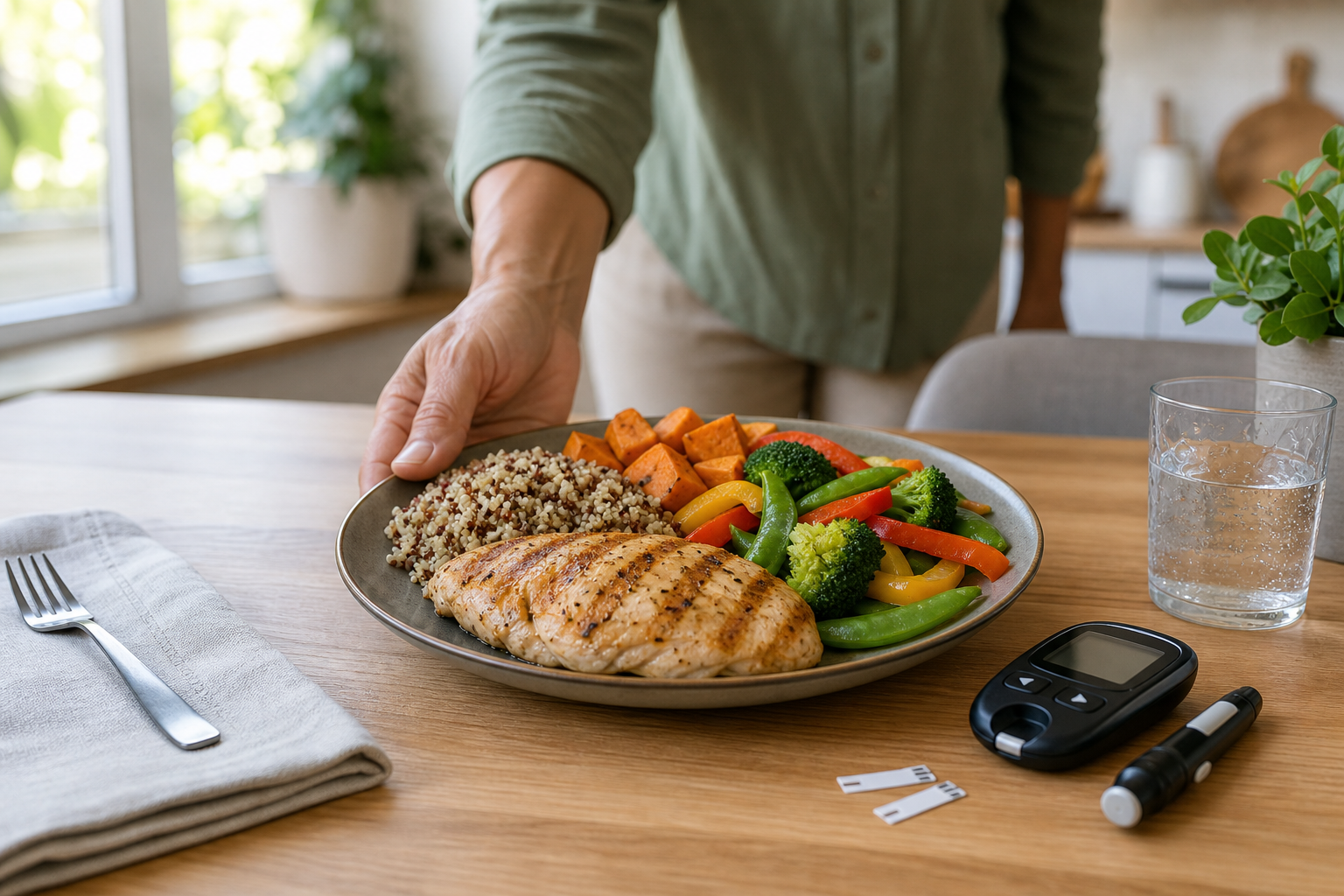
This is one reason why balanced plates matter. A meal that includes non-starchy vegetables, protein, and a moderate amount of carbohydrates is often easier on blood sugar than a meal made mostly of starch.
“A post-meal spike is not just about sugar — it is about the speed, amount, and combination of foods on the plate.”
🥕 4. Protein, Fat, and Fiber Slow Digestion
Meals that include protein, healthy fat, and fiber tend to keep blood sugar steadier because they slow how quickly food leaves the stomach and is absorbed. That is why pairing carbs with foods like eggs, chicken, fish, avocado, nuts, seeds, yogurt, or vegetables can make a big difference.
For example, apple slices with peanut butter will usually have a gentler impact than apples alone. The same idea applies to rice with chicken and vegetables compared with rice by itself.
💪 5. Insulin Resistance Can Make Spikes Bigger
If the body does not respond well to insulin, glucose can stay in the bloodstream longer after a meal. This is common in prediabetes, type 2 diabetes, and insulin resistance, but it can also happen when stress, poor sleep, illness, or inactivity affect blood sugar control.
That means two people can eat the same meal and have very different glucose responses. One may return to baseline quickly, while the other may see a bigger and longer-lasting increase.
Ways to reduce a bigger post-meal rise
- Choose high-fiber carbs more often.
- Pair carbs with protein and healthy fat.
- Watch portion sizes, especially with starches.
- Take a short walk after eating.
- Limit sugary drinks and refined snacks.
🚶 6. Activity and Timing Also Play a Role
Light movement after a meal, even a 10 to 15 minute walk, can help muscles use glucose more efficiently. On the other hand, long periods of sitting may allow blood sugar to stay elevated longer.
Sleep, stress, medications, and the time of day you eat can also influence your blood sugar response. For many people, evening meals cause a bigger spike than earlier meals, especially when dinner is large or carb-heavy.
✅ The Bottom Line
Blood sugar rises after eating because your body is turning food into usable energy. The size of that rise depends on the kind of food you eat, how much you eat, and how well your body handles glucose. For many people, simple changes like adding fiber, balancing meals, and moving after eating can help keep numbers more stable.
If you are noticing frequent or very high spikes, it may be worth tracking meals and blood sugar patterns so you can see what your body responds to best. Small changes often add up to a meaningful difference.
Want more practical diabetes tips? Explore our latest nutrition guides to learn how everyday food choices can support steadier blood sugar and better energy.